Start with a CW Summit baseline
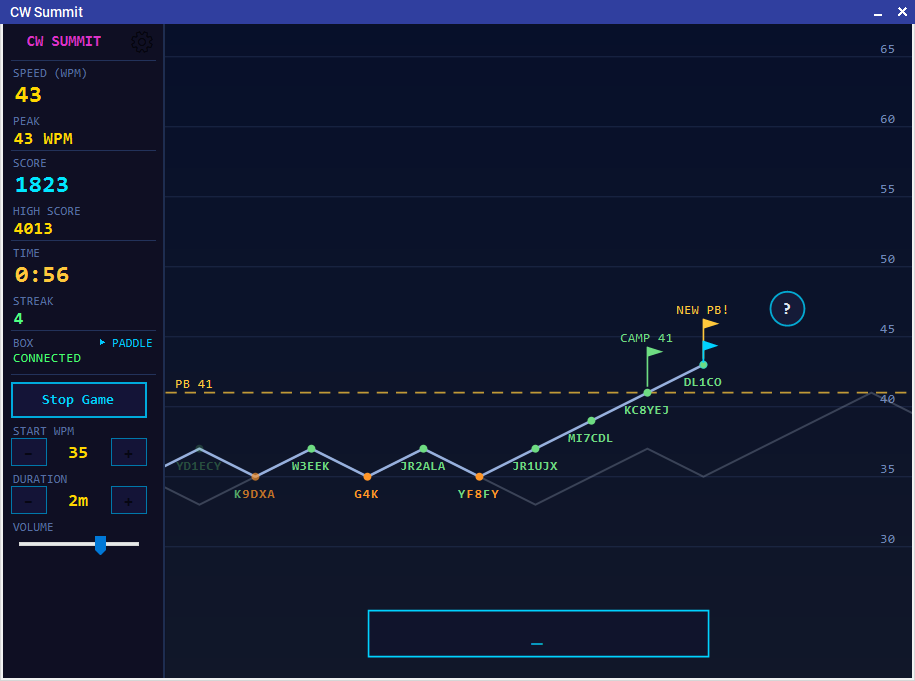
CW Summit runs free in the browser. It sends one character, group, word or callsign at a time. A correct answer raises the WPM; a miss lowers it. The mountain profile records the whole run, so the useful result is not only the peak. Look at the speed you could hold, how quickly you recovered after a miss and where accuracy began to fall.
For a useful baseline, choose one target type, a starting speed you can copy comfortably and a fixed duration. Three to five minutes is enough. Use the keyboard if you want to measure RX alone, or answer with an OpenShack Box paddle to include your sending. Repeat the same setup before changing the ladder or starting speed: comparable runs show progress better than one lucky summit.
Train the weak dimension
A RufzXP score can rise while plain-text copy stays unchanged. You may copy a pileup well but lose accuracy when sending at the same speed. Use separate drills, then compare results over time. The number that improves is useful; the number that refuses to move tells you what to train next.
RufzXP and RufzXP TX!
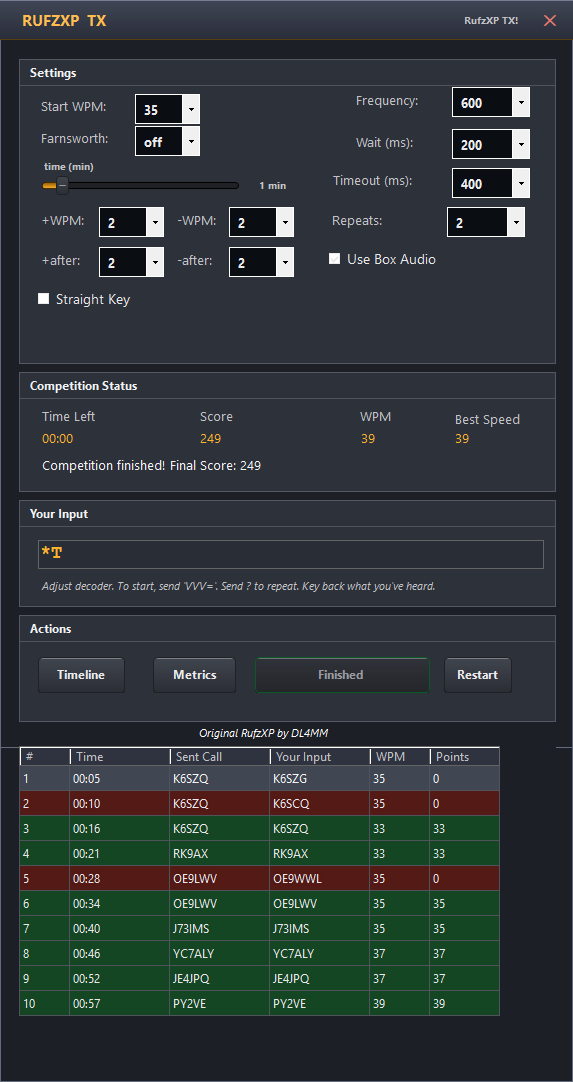
RufzXP is the classic idea: hear one callsign, type it, and let the speed adapt after every answer. RufzXP TX! turns it around—hear the callsign and send it back on your paddle while OpenShack checks what you actually keyed. One trains fast recognition; the other exposes whether your sending remains readable at that pace.
PileUp: choose one signal
The PileUp trainer produces several independent callers on different pitches, with realistic timing offsets. Your task is not to decode a wall of noise at once. Pick a station, hold its callsign, log it and move to the next. Increase callers only when you can keep the process controlled.
Add reaction pressure with Morse Game
Morse Game adds moving targets and a time limit to characters, groups, words or callsigns. Use CW Summit when you want a measured speed ladder; use Morse Game when you want to practise making quick decisions and continuing after a missed target. Both run in the browser.
Quality RX: copy a complete transmission
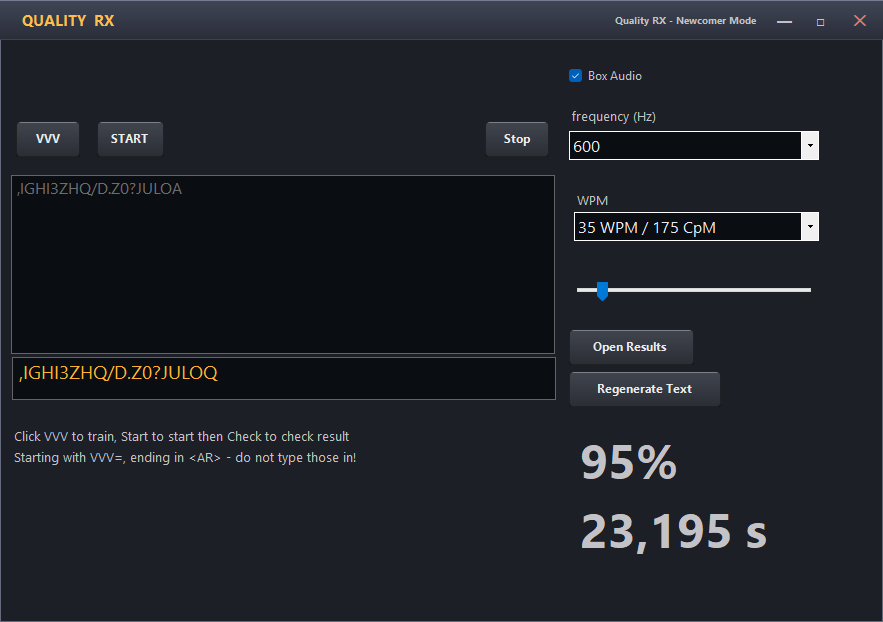
Quality RX sends a random CW text and compares your transcription with the original. It measures sustained copy rather than one isolated answer. Use the Newcomer/Farnsworth setting when needed, then reduce the extra spacing and raise WPM while watching both accuracy and completion time.
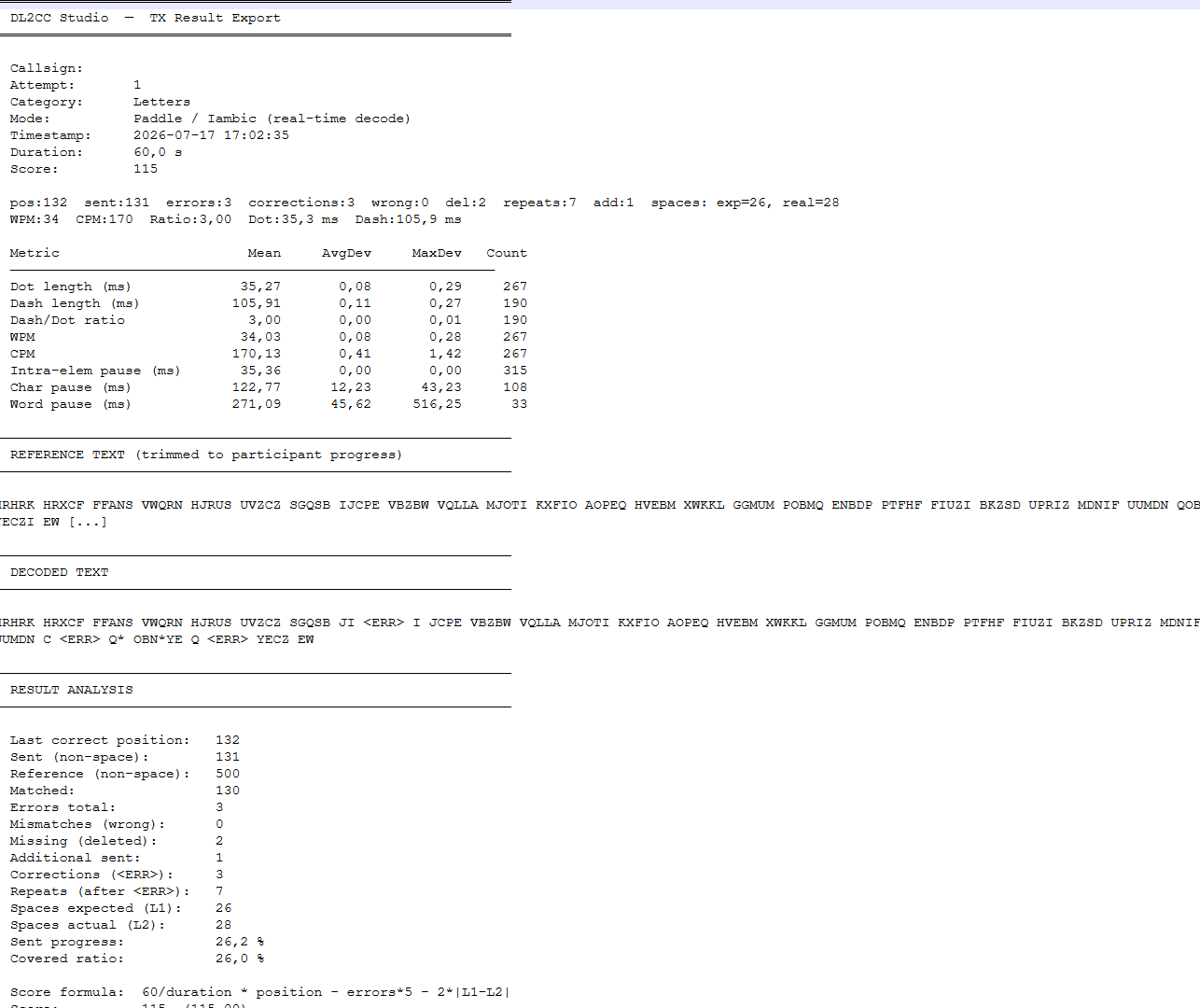
One-minute TX runs
For sending, a one-minute run is long enough for timing drift and fatigue to appear but short enough to repeat. Key the reference text, review the accuracy score, then inspect element and pause errors. Change one thing—speed, grip, keyer mode or pause discipline—and run it again. A clean 30 WPM minute is more valuable than a brief, unreadable burst at 40.